Black streaks, green algae, and mildew on your siding aren't just cosmetic — they're organic growth slowly working against your home. We remove it the right way, without the risk of damage.
House washing isn't pressure washing — and that distinction actually matters. Siding can be damaged by high pressure, so instead we use a low-pressure soft wash method: a cleaning solution applied to the surface, allowed to dwell and break down mold, mildew, and algae, then rinsed away with gentle, controlled pressure.
The result is the same dramatic transformation you'd expect, without the risk of stripping paint, denting siding, or forcing water behind panels — mistakes that are common with a straight high-pressure approach on vertical surfaces.
We also take care of what's around your home before we ever start. Landscaping and plants near the house are pre-wetted with plain water first, which helps protect them from the cleaning solution during application.
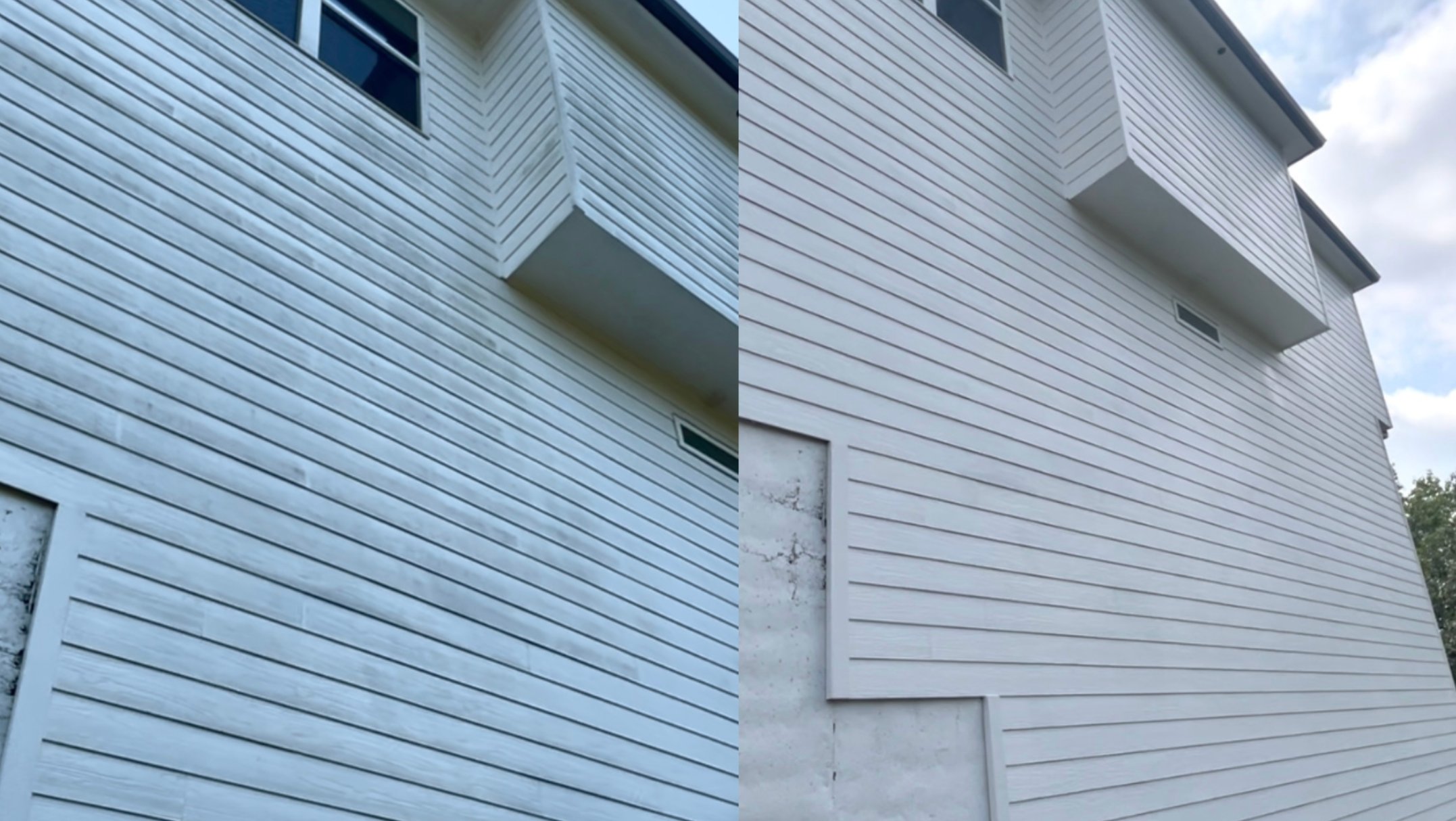
Soft washing is gentle enough for the materials homes are actually built with.
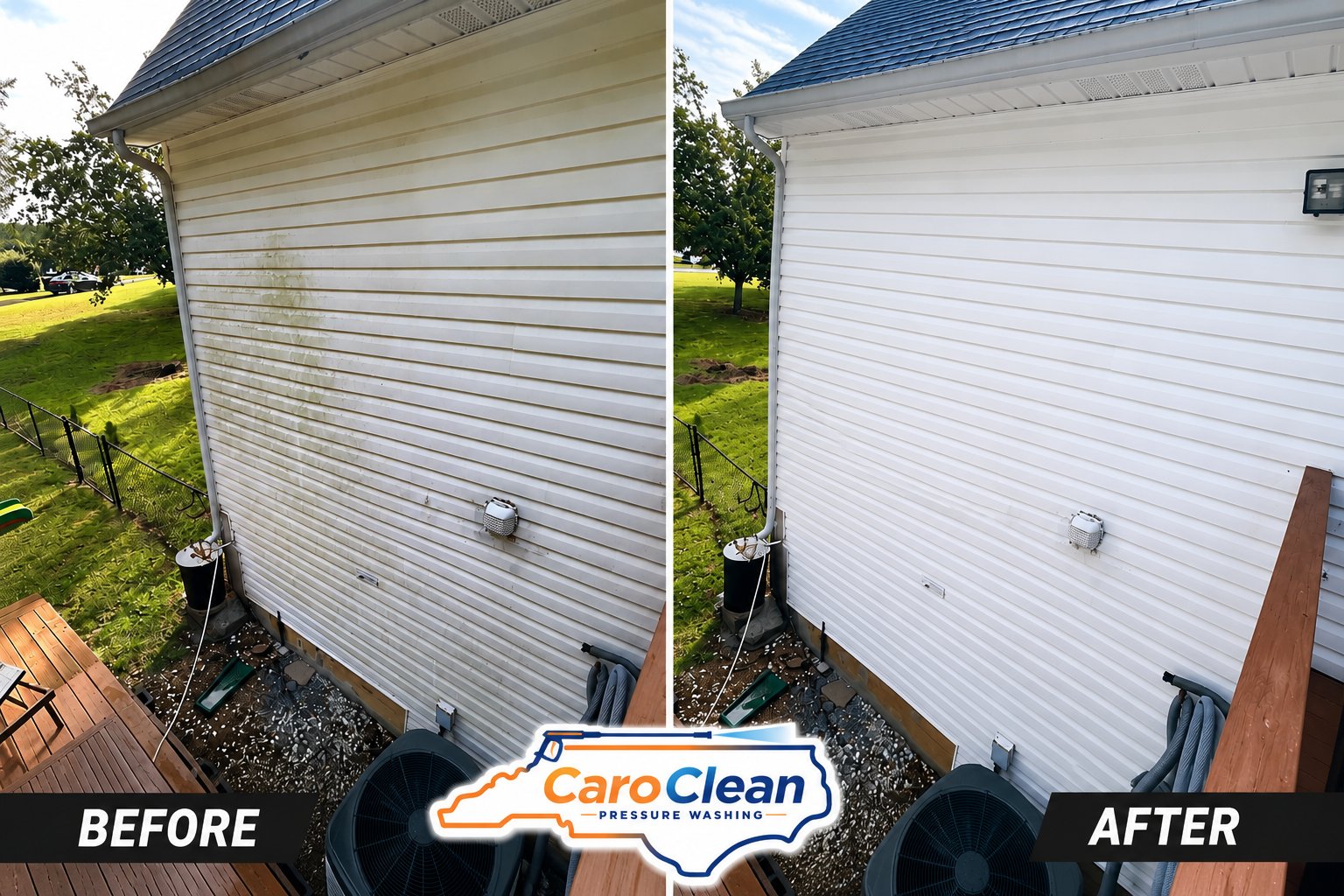
Yes. Soft washing is specifically the safer method for vinyl, relying on a cleaning solution and low pressure rather than force, which is why we use it instead of standard pressure washing on siding.
Yes, black algae and the streaking it causes are some of the most common things we treat during a soft wash.
We use the safest method for each surface. Older homes or older paint sometimes need a gentler approach, which we always account for before starting.
The solution is given time to break down mold, mildew, and algae before we rinse it off with controlled, low pressure — the dwell time is part of what makes soft washing effective without needing high pressure.